Addressing the opening session of the BRICS finance ministers and central bank governors’ meeting in India’s Jaipur on Wednesday, Abdolnasser Hemmati thanked the Indian government and central bank for hosting the gathering.
“BRICS will have the greatest impact when it can turn policy dialogues into practical initiatives and operational mechanisms,” Hemmati said, stressing the need to translate cooperation into concrete measures.
Referring to the difficult and complex regional and international circumstances, as well as the US-Israeli military aggression against Iran’s sovereignty and territorial integrity, Hemmati said economic and financial stability cannot be achieved without peace, respect for international law and adherence to the principles of the UN Charter.
He noted that Iran has maintained active participation in the BRICS framework since joining the group, with its Central Bank contributing to specialized working groups on cross-border payments, the use of national currencies, financial technologies, cybersecurity, artificial intelligence and sustainable finance.
Hemmati also voiced support for initiatives that can reduce the cost and risks of transactions, facilitate the use of national currencies and bring payment infrastructures among member states closer together.
He described the New Development Bank (NDB) as one of BRICS’ most important institutional achievements and said Iran is ready to expand its engagement with the bank and pursue membership “with the cooperation and support” of its members.
On the sidelines of the BRICS meeting, Hemmati also held talks with Dilma Rousseff, president of the New Development Bank.
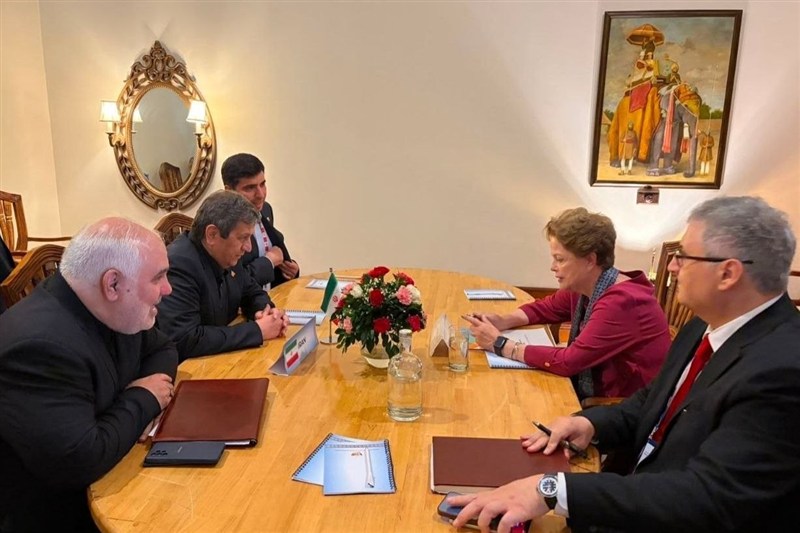
Rousseff described Iran’s participation in the NDB as important and highlighted the country’s role and potential in expanding regional and international cooperation.
The two sides stressed the need to continue expert-level consultations on Iran’s membership in the NDB and its access to the bank’s facilities.