Speaking at a meeting with ambassadors, chargés d’affaires, and heads of foreign and international missions based in Tehran on Tuesday, Araqchi said difficulties in reaching a comprehensive agreement had emerged following the US-Israeli war of aggression against Iran, prompting the two sides to divide negotiations into two stages.
He explained that the first phase focused on ending the imposed war and addressing issues related to the Strait of Hormuz, maritime blockade concerns, reconstruction, and related matters, culminating in a memorandum of understanding.
According to Araqchi, the second phase will begin immediately after the signing of the MoU and continue for 60 days, during which the parties will seek to reach a final agreement addressing nuclear issues and sanctions relief.
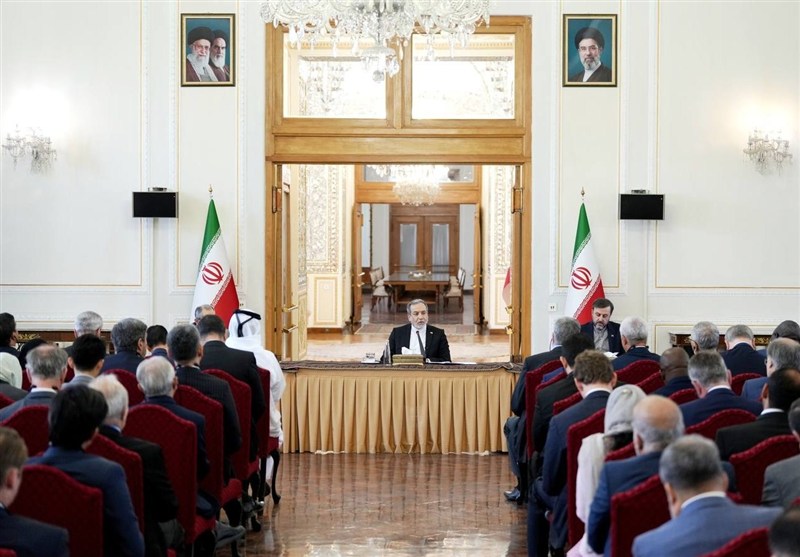
The foreign minister said that after three months of negotiations that began alongside the conflict and continued until June 15, the first stage was finalized. He added that while the official implementation of the memorandum will begin on Friday, June 19, the announcement of the end of the war had already been made on Monday morning, describing the immediate and permanent cessation of military operations across all fronts, including Lebanon, as the most important element of the understanding.
Araqchi said Iran had viewed ending the war in Lebanon as an essential component of ending the conflict, arguing that developments on both fronts had become interconnected. He stated that from Tehran’s perspective, the memorandum involves the US and the Israeli regime on one side and Iran and Hezbollah on the other, adding that ending the war in Lebanon also requires an end to occupation and that any future Israeli military action or continued presence in Lebanese territory would be regarded as a violation of the memorandum.
Araqchi also expressed appreciation to Qatar and Pakistan for their efforts in facilitating the process.