Major General Mohammad Ali Jafari, the former commander of the IRGC, highlighted key points regarding Iran’s conditions for negotiations with the United States in an interview with Tasnim.
He stressed that “as long as the war has not ended on all fronts, sanctions have not been lifted, frozen funds have not been released, war damages have not been compensated, and Iran’s sovereignty over the Strait of Hormuz has not been recognized, there will be no further negotiations”.
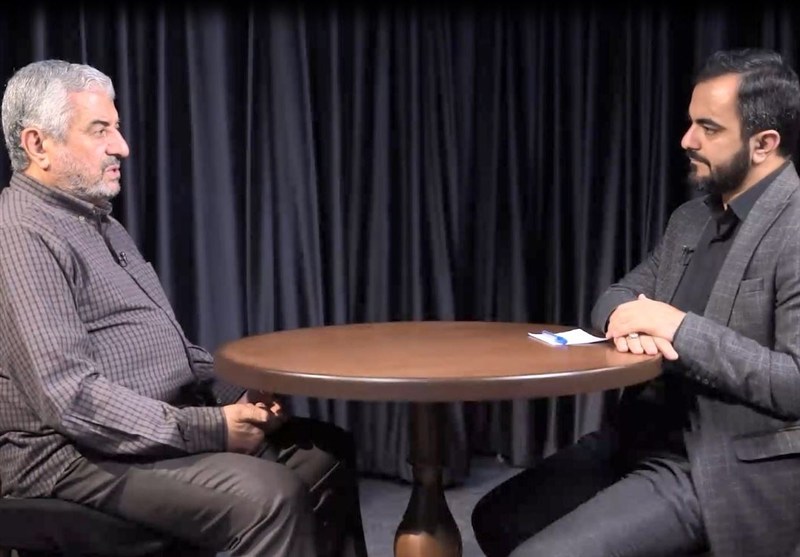
Below are excerpts from his remarks:
“The United States must pay the price for its bad faith in negotiations.”
“Iran was attacked militarily by the enemy twice in the middle of negotiations.”
“These repeated breaches of promises and commitments by the enemy have had clear consequences for us. We are completely distrustful of the enemy, and the whole world acknowledges that we are right in this regard.”
“Our people have all reached the conclusion that this enemy can no longer be trusted. Now this distrust, the bad faith and breaches of commitments committed by the enemy by launching war in the middle of negotiations, must come at a cost for them.”
“The enemy’s behavior caused us to make a fundamental strategic shift and change our strategy regarding negotiations and engagement. This strategic shift means that this time we set preconditions for negotiations; in other words, the enemy must undertake a series of confidence-building measures.”
“What the establishment has announced today and stands by is precisely this issue. Some of these matters may come in the form of preconditions; meaning the enemy must provide written commitments, sign them, and guarantee that certain actions will not be repeated, such as ending the war and refraining from military threats.”
“Another part must be carried out in practice, such as releasing Iran’s blocked funds.”
“Therefore, today we are facing a major change in the negotiation approach, a change that did not exist before. Previously, preconditions or confidence-building measures were not raised in negotiations in this manner, but now that the enemy has created this level of distrust and this has been proven to the whole world, it is our right to raise such preconditions.”
“Our logic is that confidence-building measures must first be carried out, and only after that should we enter the next phase and step of negotiations on nuclear issues so that decisions can be made about them. Until these measures are implemented, entering the next stages is meaningless.”
“If war resumes, we will strike the enemy with heavier blows that we have not delivered before.”
“The president and the head of the negotiating team are fully following the Leader.”
“At present, we (Iran) are not engaged in direct negotiations with the enemy. At this first stage, we are in fact exchanging messages through a third country, such as Pakistan, in order to present and explain our preconditions and then obtain commitments from the enemy. If commitments are given, only then will we enter the stage of negotiations on other issues.”
“This is a new strategy; a strategy which, in my opinion, will be highly decisive and, God willing, can help open the way forward.”
“Fortunately, officials, due to their obedience to the Leader --especially the respected president and the respected Parliament speaker (who is also responsible for the negotiations)-- are moving within this framework. Their obedience to the Leader of the Islamic Revolution has been proven, and everyone acknowledges this.”
“When the system reaches a decision and these conditions and preconditions are approved within the system and adopted by the Supreme National Security Council and the negotiating team, and are endorsed, no one opposes the principle of it. There may be differences of opinion or varying views regarding implementation methods and operational approaches, but overall, thank God, the process is moving forward well.”
“Now the enemy may accept these conditions or reject them. If it rejects them, naturally either the war will continue or other pressures that must be imposed on it will follow. Those stronger slaps that the Islamic Republic has not yet delivered could be inflicted in later stages if the enemy’s foolishness continues.”
“I am not saying war is good, but if the enemy once again acts foolishly and resumes the war, it will certainly face much stronger and heavier slaps from the Islamic Republic.”
“The United States has no choice but to accept Iran’s legitimate demands or continue the war.”
“It is natural for the United States to become angry about the issues Iran insists upon and to be unable to accept them easily. But in my opinion, it has no choice except to accept these realities or continue the war.”
“Of course, war also causes damage to us, but there is no doubt that the cost and damage of continuing the war for the enemy and its regional allies is far greater than for us.”
“If they believed this path of war was in their interest and would bring them achievements, they would never have moved toward stopping the war and negotiations. The very fact that they have turned to this path itself shows that continuing the war has been harmful for them.”