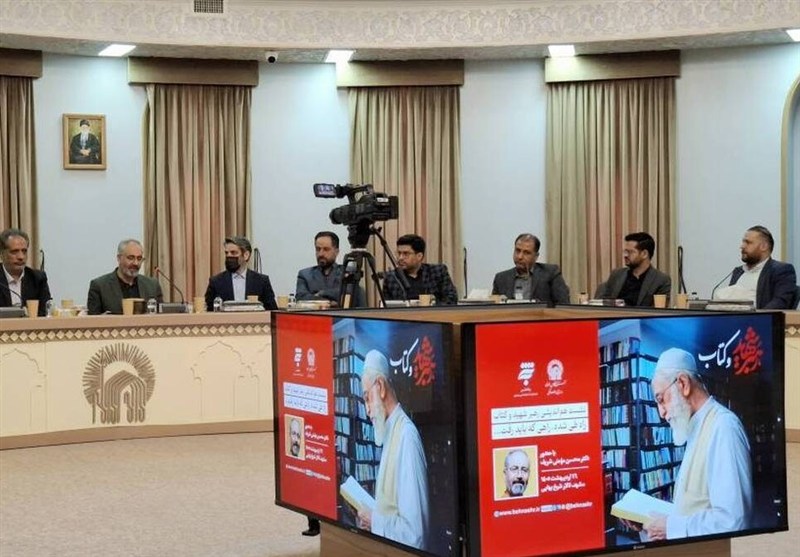
The meeting, titled “The Martyred Leader and Books; The Path Traversed and the Path Ahead,” was held at the Scientific and Cultural Organization of Astan Quds Razavi in Mashhad on May 6, attended by a group of book enthusiasts.
Speaking at the event, Masoud Farzaneh, managing director of Astan Quds Razavi Publications, said the series of meetings, which will continue regularly in the future, aims to examine the conduct and approach of the late Leader regarding the importance of books and to rediscover his literary character.
He said that amid the current turbulent conditions and the war of aggression imposed by the US and the Zionist regime, paying attention to the behavioral example of the martyred Leader could help guide society.
Farzaneh added that Ayatollah Seyed Ali Khamenei’s attention to culture, books, and reading reflected the rich identity of the Iranian nation, which, despite confronting “bloodthirsty and ruthless enemies”, takes pride in and relies upon its religious and national culture.
He also described the late Leader as one of the most exceptional figures in promoting books in Iran and said he played a significant role in fostering a culture of reading among the Iranian people.
Later in the meeting, writer and researcher Mohsen Mo’meni Sharif said books, in the thought of the martyred Leader of the Islamic Revolution, were not merely tools for study, but rather a fundamental basis for a deeper understanding of history, society, and intellectual and civilizational developments.
He said this perspective had played a decisive role in shaping the late Leader’s strategic and far-sighted outlook.
Mo’meni Sharif further stated that Ayatollah Seyed Ali Khamenei possessed a profound understanding of Iran’s history in its mythical, epic, and real dimensions, adding that his view of history was not merely descriptive or narrative, but rooted in an Islamic intellectual framework and an analysis based on divine traditions.
He described the martyred Leader of the Islamic Revolution as an example of genuine intellectualism who truly understood his nation and the Iranian world and therefore held a realistic and truthful view of the Iranian people.